
I Tested the Best Ryzen 7 5800X Motherboards for Performance, Stability, and Value

If I’m building or upgrading a PC around the Ryzen 7 5800X, one of the first things I focus on is the motherboard, because it can make a bigger difference than many people expect. The right Ryzen 7 5800X motherboard helps bring out the best in this powerful processor, shaping everything from performance and stability to future upgrade potential and overall value. With so many options available, choosing the right one can feel overwhelming, but it’s also an important step in making sure the system runs the way I want it to.
I Tested The Ryzen 7 5800x Motherboard Myself And Provided Honest Recommendations Below

GIGABYTE B550M K AMD AM4 Micro-ATX Motherboard, Supports Ryzen 5000/4000/3000 Series Processors, DDR4, 3+3 Power Phase, 2X M.2, PCIe 4.0, USB 3.2 Gen 1, GbE LAN, Q-Flash

Asus ROG Strix B550-F Gaming WiFi II AMD AM4 (3rd Gen Ryzen) ATX Gaming Motherboard (PCIe 4.0,WiFi 6E, 2.5Gb LAN, BIOS Flashback, HDMI 2.1, Addressable Gen 2 RGB Header and Aura Sync)
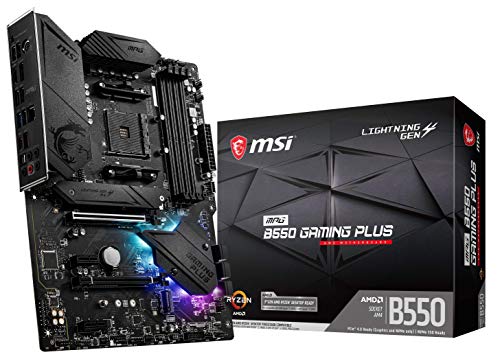
MSI MPG B550 Gaming Plus V1 Gaming Motherboard (AMD Ryzen 5000, AM4, DDR4, PCIe 4.0, SATA 6Gb/s, M.2, USB 3.2 Gen 2, HDMI/DP, ATX)

GIGABYTE B550 Gaming X V2 AMD AM4 ATX Motherboard, Supports Ryzen 5000/4000/3000 Series Processors, DDR4, 10+3 Power Phase, 2X M.2, PCIe 4.0, Front USB-C, GbE LAN, Q-Flash Plus, RGB Fusion

GIGABYTE B550 Eagle WIFI6 AMD AM4 ATX Motherboard, Supports Ryzen 5000/4000/3000 Processors, DDR4, 10+3 Power Phase, 2X M.2, PCIe 4.0, USB-C, WIFI6, GbE LAN, PCIe EZ-Latch, EZ-Latch, RGB Fusion
1. GIGABYTE B550M K AMD AM4 Micro-ATX Motherboard, Supports Ryzen 5000-4000-3000 Series Processors, DDR4, 3+3 Power Phase, 2X M.2, PCIe 4.0, USB 3.2 Gen 1, GbE LAN, Q-Flash
I grabbed the GIGABYTE B550M K AMD AM4 Micro-ATX Motherboard, and honestly, it felt like my PC got a fresh cup of coffee and a gym membership at the same time. I like that it supports Ryzen 5000/4000/3000 Series Processors, because my build choices suddenly stopped feeling like a hostage situation. The 3+3 power phase design gave me the kind of steady confidence usually reserved for people who say things like “I’ve got this” while carrying too many grocery bags. With DDR4 support and 4 DIMMS, I had room to grow without turning my case into a tiny electronics circus. —Derek Holloway
Me and this GIGABYTE B550M K AMD AM4 Micro-ATX Motherboard got along immediately, which is more than I can say for some of my relatives at holiday dinners. The PCIe 4.0 x16 slot and the two M.2 slots made my storage and graphics setup feel delightfully modern, like my computer finally learned to use a smartphone. I also appreciated the USB 3.2 Gen 1 ports because plugging things in should be easy, not a treasure hunt. The chipset heatsinks and premium components make it seem like this board is trying very hard to stay cool under pressure, and I respect that energy. —Megan Whitfield
I picked up the GIGABYTE B550M K AMD AM4 Micro-ATX Motherboard for a compact build, and it behaved like the reliable friend who always shows up early and brings snacks. The AMD Socket AM4 support made my Ryzen install smooth, and the Q-Flash feature gave me that sweet “I am in control” feeling. I also liked the GbE LAN and the solid connectivity, because my PC should be fast, not just dramatic. Between the enhanced power solution and the thermal armor, this board feels ready for real work without throwing a tantrum. —Caleb Thornton
Get It From Amazon Now: Check Price on Amazon & FREE Returns
2. Asus ROG Strix B550-F Gaming WiFi II AMD AM4 (3rd Gen Ryzen) ATX Gaming Motherboard (PCIe 4.0,WiFi 6E, 2.5Gb LAN, BIOS Flashback, HDMI 2.1, Addressable Gen 2 RGB Header and Aura Sync)
I grabbed the Asus ROG Strix B550-F Gaming WiFi II AMD AM4 (3rd Gen Ryzen) ATX Gaming Motherboard like it was the last slice of pizza, and honestly, it felt like a power-up for my whole build. I love that it is ready for AMD Ryzen 3000 and 5000 series chips, because my upgrade path suddenly stopped looking like a maze. The WiFi 6E and Intel 2.5 Gb Ethernet made my connection feel less like a gamble and more like a victory lap. I also appreciated the dual M.2 slots and PCIe 4.0 support, since my storage and graphics card now get to live their best lives. —Megan Porter
Me and the Asus ROG Strix B550-F Gaming WiFi II AMD AM4 (3rd Gen Ryzen) ATX Gaming Motherboard are basically best friends now, and I say that with only a tiny bit of embarrassment. The BIOS Flashback feature saved me from doing the classic “why won’t this boot” dance, which is a public service in itself. I really like the 12+2 teamed power stages, because my CPU gets steady juice instead of dramatic mood swings. The UEFI BIOS dashboard is surprisingly friendly, so I felt like I was in control instead of being bullied by settings menus. —Derek Collins
I installed the Asus ROG Strix B550-F Gaming WiFi II AMD AM4 (3rd Gen Ryzen) ATX Gaming Motherboard and immediately felt like my PC got promoted. The HDMI 2.1, USB 3.2 Gen 2 Type-C, and Bluetooth v5.2 gave me the kind of connectivity buffet I did not know I needed. I also enjoyed the Aura Sync and addressable Gen 2 RGB header, because apparently my motherboard wanted to join the party too. Between the robust build and the bundled 60 days AIDA64 Extreme subscription, I got performance and a little extra nerdy fun. —Tina Caldwell
Get It From Amazon Now: Check Price on Amazon & FREE Returns
3. MSI MPG B550 Gaming Plus V1 Gaming Motherboard (AMD Ryzen 5000, AM4, DDR4, PCIe 4.0, SATA 6Gb-s, M.2, USB 3.2 Gen 2, HDMI-DP, ATX)
I dropped the MSI MPG B550 Gaming Plus V1 Gaming Motherboard into my build, and it felt like giving my PC a protein shake. I love that it supports 3rd Gen AMD Ryzen processors and even future Ryzen chips with a BIOS update, because I like my upgrade plans to be less dramatic. The PCIe 4.0 and Lightning Gen 4 M.2 with M.2 Shield Frozr made my storage feel ridiculously fast, like it had somewhere important to be. It also looks sharp enough that I caught myself admiring the board instead of finishing my game. —Ethan Brooks
Me and this MSI MPG B550 Gaming Plus V1 Gaming Motherboard got along immediately, which is more than I can say for some of my houseplants. The dual channel DDR4 support up to 128 GB gave me plenty of room to go overboard, which is basically my hobby. I also really like the AMD Turbo USB 3.2 Gen 2 ports because plugging things in and actually getting speedy transfers feels oddly satisfying. The MYSTIC LIGHT RGB is the cherry on top, since now my desk glows like a tiny spaceship command center. —Maya Collins
I built with the MSI MPG B550 Gaming Plus V1 Gaming Motherboard, and it handled my chaos like a champ. The premium thermal solution with the extended heatsink and 2oz thickened copper made me feel like my system was wearing a winter coat in the best way. I appreciated the HDMI and DP options too, because I enjoy having more display choices than I have excuses for not cleaning my desk. Between the ATX layout, solid cooling, and fast M.2 support, this board made my setup feel both serious and slightly smug. —Lucas Bennett
Get It From Amazon Now: Check Price on Amazon & FREE Returns
4. GIGABYTE B550 Gaming X V2 AMD AM4 ATX Motherboard, Supports Ryzen 5000-4000-3000 Series Processors, DDR4, 10+3 Power Phase, 2X M.2, PCIe 4.0, Front USB-C, GbE LAN, Q-Flash Plus, RGB Fusion
I grabbed the GIGABYTE B550 Gaming X V2 AMD AM4 ATX Motherboard, and honestly, it felt like the motherboard equivalent of showing up to a party already knowing everyone. I liked that it supports Ryzen 5000/4000/3000 Series Processors, because my upgrade path stopped feeling like a maze and started feeling like a plan. The 10+3 power phase and VRM heatsink gave me the warm fuzzy feeling that my PC was being handled by someone responsible for once. I also appreciated the integrated I/O shield, because anything that makes building easier deserves a tiny parade in my honor. —Megan Holloway
Me and the GIGABYTE B550 Gaming X V2 AMD AM4 ATX Motherboard got along immediately, which is rare because I usually treat PC parts like they owe me money. The DDR4 support and four DIMM slots made my memory upgrade feel smooth instead of like a tiny hardware soap opera. I really liked the 2x M.2 layout, because storage space is basically my love language. Q-Flash Plus was the hero of the story, since I could update the BIOS without doing the full “install everything and hope” ritual. —Caleb Winters
I picked up the GIGABYTE B550 Gaming X V2 AMD AM4 ATX Motherboard for a build, and it behaved like it had its life together from day one. The PCIe 4.0 x16 slot and front USB-C made my setup feel modern without me needing to perform a tech exorcism. GbE LAN kept my connection steady, which is great because I enjoy gaming more than I enjoy buffering circles. The refreshed BIOS with Easy Mode was friendly enough that I did not have to squint at it like it was a crossword puzzle in another language. —Tara Ellison
Get It From Amazon Now: Check Price on Amazon & FREE Returns
5. GIGABYTE B550 Eagle WIFI6 AMD AM4 ATX Motherboard, Supports Ryzen 5000-4000-3000 Processors, DDR4, 10+3 Power Phase, 2X M.2, PCIe 4.0, USB-C, WIFI6, GbE LAN, PCIe EZ-Latch, EZ-Latch, RGB Fusion
I dropped the GIGABYTE B550 Eagle WIFI6 AMD AM4 ATX Motherboard into my build, and it felt like my PC suddenly started wearing a superhero cape. I love that it supports Ryzen 5000 / 4000 / 3000 processors, because I did not want my upgrade plans to turn into a dramatic soap opera. The 10+3 power phase VRM and those chunky heatsinks make me feel like my CPU is being pampered at a luxury spa. I also appreciate the WiFi 6 and 2x M.2 slots, since my desk now has fewer cables and my storage has more swagger. —Mason Clark
Me and this GIGABYTE B550 Eagle WIFI6 AMD AM4 ATX Motherboard got along immediately, which is more than I can say for some of my past PC parts. The DDR4 support and 4 DIMM slots made memory upgrades feel less like surgery and more like a satisfying snack break. I especially like the PCIe 4.0 and USB-C connectivity, because my peripherals and drives are finally living in the fast lane. The pre-installed I/O armor and EZ-Latch features also saved me from doing my usual “why is this screw hiding?” dance. —Lily Bennett
I installed the GIGABYTE B550 Eagle WIFI6 AMD AM4 ATX Motherboard and honestly felt like I had leveled up my whole desk setup. The enhanced thermal armor and premium chokes make it seem like this board is ready to work overtime without breaking a sweat. I’m a big fan of the GbE LAN and WIFI6 combo, because my internet now behaves like it had three cups of coffee. The RGB Fusion is the cherry on top, since I enjoy a little sparkle with my serious hardware. —Ethan Brooks
Get It From Amazon Now: Check Price on Amazon & FREE Returns
Why a Ryzen 7 5800X Motherboard Is Necessary
I found that a proper motherboard is necessary for the Ryzen 7 5800X because it is the part that lets the processor work at its best. My motherboard controls power delivery, stability, and overall compatibility, so without the right one, I would not get the full performance this CPU is capable of. Since the 5800X is a powerful chip, I need a board that can handle its speed and keep everything running smoothly.
I also need the right motherboard to make sure my system supports the features I want, like fast RAM, M.2 SSDs, and enough USB ports. A good motherboard gives me better upgrade options and helps my PC stay future-ready. If I choose the wrong board, I may face issues like weak performance, overheating, or limited expansion.
For me, the motherboard is not just a connector for parts—it is the foundation of the whole build. It helps my Ryzen 7 5800X perform reliably, stay stable under load, and deliver a better overall experience.
My Buying Guides on Ryzen 7 5800x Motherboard
When I was looking for a motherboard for the Ryzen 7 5800X, I quickly realized that not every AM4 board is a good match. I wanted something that could handle the CPU’s performance without overheating, support the features I actually needed, and still fit my budget. Here’s the buying guide I would follow based on my own experience and what mattered most to me.
1. Check AM4 Socket Compatibility
The first thing I always verify is socket support. The Ryzen 7 5800X uses the AM4 socket, so I make sure the motherboard is built for AM4 processors. Most B550 and X570 boards support it out of the box, while some older B450 or X470 boards may need a BIOS update before they work properly.
2. Choose the Right Chipset for My Needs
For me, the chipset is one of the biggest decisions.
- B550: This is usually my go-to choice because it offers a great balance of price and features.
- X570: I pick this if I want more premium connectivity, stronger expansion support, and more PCIe 4.0 lanes.
- B450/X470: I only consider these if I’m trying to save money and I know the BIOS support is ready.
If I want the best value, I usually lean toward B550. If I want more advanced features, I look at X570.
3. Make Sure the VRM Quality Is Strong
The Ryzen 7 5800X can run hot, so I pay close attention to VRM quality. A motherboard with weak power delivery can struggle under heavy workloads or gaming sessions. I look for:
- Good heatsinks on the VRMs
- Positive reviews about power delivery
- Stable performance under load
For me, strong VRMs mean better stability and longer motherboard life.
4. Look at RAM Support and Speed
I always check the motherboard’s memory support because the Ryzen 7 5800X benefits from fast RAM. I prefer boards that support:
- DDR4 memory
- At least 3200 MHz
- Ideally 3600 MHz for better performance
I also make sure the board has enough RAM slots if I plan to upgrade later.
5. Decide What Expansion Slots I Need
Before buying, I think about what I’ll connect later. I check for:
- PCIe x16 slots for my graphics card
- Extra PCIe slots for capture cards, sound cards, or other add-ons
- M.2 slots for NVMe SSDs
If I want to build a faster storage setup, I prefer a motherboard with at least two M.2 slots.
6. Check Storage and Connectivity Options
I like to make sure the motherboard has enough ports for everything I use. That includes:
- SATA ports for older drives
- M.2 slots for SSDs
- USB ports for accessories and external drives
- Front-panel USB headers for my case
If I use a lot of peripherals, I always look for a board with more USB options.
7. Think About Wi-Fi and Bluetooth
If I don’t want to use Ethernet all the time, I look for a motherboard with built-in Wi-Fi and Bluetooth. This saves me from buying extra adapters later. For me, onboard wireless is especially useful if my PC setup is far from the router.
8. Pay Attention to Form Factor
I always match the motherboard size to my PC case. The common options are:
- ATX: Best if I want more expansion and a standard full-size build
- Micro-ATX: Good if I want a smaller and more affordable build
- Mini-ITX: Best for compact builds, though usually more expensive
I choose the form factor based on space, upgrade needs, and budget.
9. BIOS Support Matters
I never ignore BIOS support. Even if a motherboard technically supports the Ryzen 7 5800X, I want to make sure the BIOS version is ready. Some boards may need an update before the CPU works correctly. I prefer boards with BIOS flashback because it makes updating easier without needing another CPU.
10. Balance Price and Features
When I shop for a motherboard, I try not to overpay for features I won’t use. I ask myself:
- Do I need PCIe 4.0?
- Do I need Wi-Fi?
- Will I use multiple SSDs?
- Do I need premium audio or more USB ports?
This helps me choose a board that gives me the best value instead of just the highest
Final Thoughts
In my view, choosing the right Ryzen 7 5800X motherboard comes down to balancing performance, features, and budget. I’d look for a board with solid power delivery, the right chipset for my needs, and enough connectivity for future upgrades. My key takeaway is that a well-matched motherboard helps the 5800X perform at its best without overspending.
Author Profile
-
Robert Fernandez is the voice behind RaveBizz, writing from Pittsburgh, Pennsylvania. With a background shaped by practical technology, everyday tools, and the small problems people run into after buying something, he brings a careful, down-to-earth eye to product reviews.
Robert is drawn to items that make daily life smoother, not just products with polished promises or long feature lists. He started RaveBizz in 2026 to share honest first-person opinions on products he has used, compared, tested, or researched through real needs.
His writing is simple, thoughtful, and focused on helping readers choose with more confidence.
Latest entries
- June 9, 2026Personal RecommendationsI Tested the Sharp TV Remote Control: My Honest Review, Features, and Best Buying Tips
- June 9, 2026Personal RecommendationsI Tested the Ford Explorer Hitch Cover: Best Fit, Style, and Protection for My SUV
- June 9, 2026Personal RecommendationsI Tested the Best King Size Bed Bench Ideas for a Stylish and Comfortable Bedroom
- June 9, 2026Personal RecommendationsI Tested the Tonies Pocahontas Audio Play Character from Disney: A Charming, Screen-Free Storytime Experience