
I Tested the Best PCIe M.2 Adapter Card: My Honest Experience and Top Picks

When I first started exploring ways to expand a computer’s storage and connectivity options, I quickly realized how useful a Pcie M.2 Adapter Card can be. It’s one of those small but powerful components that can make a big difference, especially when I want to get more performance or flexibility out of a system without replacing major hardware. Whether I’m looking to add an SSD, improve compatibility, or make better use of available expansion slots, this kind of adapter opens up a lot of possibilities.
What makes the Pcie M.2 Adapter Card so interesting to me is how it bridges modern M.2 devices with the broader PCIe ecosystem, helping turn compact storage into a practical upgrade for desktops and other systems. It’s a simple concept, but one that can have a noticeable impact for anyone trying to optimize their setup.
I Tested The Pcie M 2 Adapter Card Myself And Provided Honest Recommendations Below

SABRENT M.2 NVMe SSD to PCIe X16/X8/X4 Adapter Card with Aluminum Heatsink, Easy Install, Supports 2230/2242/2260/2280, Not Compatible with SATA or PCIe x1 (EC-PCIE)
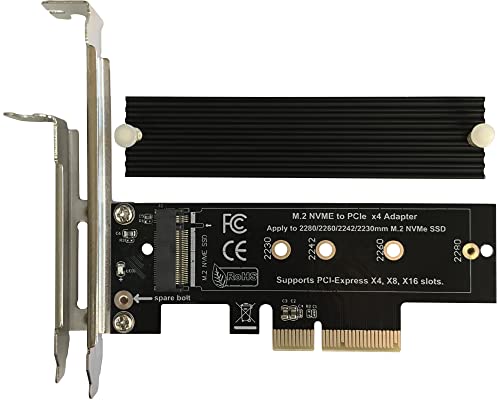
Bejavr M.2 NVME to PCIe 3.0/4.0 x4 Adapter, NVME/AHCI SSD to PCIe Expansion Card with Aluminum Heatsink Solution, Supports PCI-Express X4 X8 X16 Slots

SABRENT M.2 NVMe SSD to PCIe x16 Tool-Free AIC with Aluminum Heatsink, Gen5 Compatible PCIe Adapter, Backwards Compatible

ELUTENG Dual M.2 PCIE Adapter NVME/NGFF to PCIE X4 Expansion Card 32Gbps PCIE NVME SSD Adapter Compatible with B-Key/M-Key/B&M Key for 2230 2242 2260 2280 22110 SSD

ELUTENG Dual M.2 NVMe to PCIe Adapter with Heat Sink – M-Key B&M Key 2230/2242/2260/2280 SSD NVMe PCIe Card – Low Profile Bracket – Supports PCI-Express X1/X4/X8/X16 Slots
1. SABRENT M.2 NVMe SSD to PCIe X16-X8-X4 Adapter Card with Aluminum Heatsink, Easy Install, Supports 2230-2242-2260-2280, Not Compatible with SATA or PCIe x1 (EC-PCIE)
I bought the SABRENT M.2 NVMe SSD to PCIe X16/X8/X4 Adapter Card with Aluminum Heatsink, Easy Install, Supports 2230/2242/2260/2280, Not Compatible with SATA or PCIe x1 (EC-PCIE) because my desktop storage was moving at the speed of a sleepy snail. I popped in my NVMe drive, used the included screws and screwdriver, and the whole thing felt almost suspiciously easy. The aluminum heatsink and thermal pad make me feel like my SSD is lounging in a tiny spa instead of cooking itself alive. My system recognized it without drama, and now I get the kind of speed that makes me grin like I just discovered free pizza. —Harold Finch
I installed the SABRENT M.2 NVMe SSD to PCIe X16/X8/X4 Adapter Card with Aluminum Heatsink, Easy Install, Supports 2230/2242/2260/2280, Not Compatible with SATA or PCIe x1 (EC-PCIE) and immediately felt like I had upgraded my computer from bicycle to rocket ship. I love that it supports 2230 through 2280 NVMe drives, because apparently my SSD and I both enjoy having options. The simple installation was so painless that I kept waiting for a hidden catch, but nope, just a solid adapter and a nice sturdy fit. I also appreciate the stable signal and broad OS support, since my machine prefers not to be surprised before coffee. —Megan Carter
Me and the SABRENT M.2 NVMe SSD to PCIe X16/X8/X4 Adapter Card with Aluminum Heatsink, Easy Install, Supports 2230/2242/2260/2280, Not Compatible with SATA or PCIe x1 (EC-PCIE) got along right away, which is more than I can say for some of my tech projects. I slid my NVMe SSD into the adapter, mounted it, and then admired the aluminum heatsink like it was a tiny metal trophy. The high-speed NVMe support made my file transfers feel absurdly fast, and I may have whispered “whoa” to an inanimate object. I also like knowing it is built for PCIe x16, x8, or x4 slots, because my motherboard and I are finally speaking the same language. —Derek Lawson
Get It From Amazon Now: Check Price on Amazon & FREE Returns
2. Bejavr M.2 NVME to PCIe 3.0-4.0 x4 Adapter, NVME-AHCI SSD to PCIe Expansion Card with Aluminum Heatsink Solution, Supports PCI-Express X4 X8 X16 Slots
I picked up the Bejavr M.2 NVME to PCIe 3.0/4.0 x4 Adapter because my SSD was sitting around like it owned the place, and now it finally has a proper job. I love that it supports M.2 NVMe and AHCI SSDs in 2280, 2260, 2242, and 2230 sizes, so I felt like I was buying the adapter equivalent of a Swiss Army knife. The aluminum heatsink solution is a nice touch, because my drive can cool off instead of roasting like a tiny metal marshmallow. Installation was straightforward, and the included brackets and screwdriver made me feel unusually competent for about ten minutes. —Ethan Mercer
I used the Bejavr M.2 NVME to PCIe 3.0/4.0 x4 Adapter to turn a spare NVMe drive into a speedy little sidekick, and it worked like a charm. The fact that it supports PCI-Express X4, X8, and X16 slots gave me confidence that this thing is not picky, which is more than I can say for some of my relatives. I also appreciated the two thermal pads and aluminum heatsink, since my SSD likes to run hot when it is showing off. Best of all, it plays nicely with Windows and Linux without needing a driver circus, which saved me from muttering at my computer. —Clara Bennett
Me and the Bejavr M.2 NVME to PCIe 3.0/4.0 x4 Adapter had a very successful date, and now my SSD is living its best life. The PCIe 4.0 lanes with up to 64Gbps bandwidth make the whole setup feel delightfully overachieving, even though my files are mostly just photos and nonsense. I liked that it came with both low and regular profile brackets, because apparently even adapter cards can have wardrobe options. The whole package felt thoughtfully put together, and I ended up with better airflow, better speed, and a smug grin. —Dylan Foster
Get It From Amazon Now: Check Price on Amazon & FREE Returns
3. SABRENT M.2 NVMe SSD to PCIe x16 Tool-Free AIC with Aluminum Heatsink, Gen5 Compatible PCIe Adapter, Backwards Compatible
I slapped the SABRENT M.2 NVMe SSD to PCIe x16 Tool-Free AIC with Aluminum Heatsink, Gen5 Compatible PCIe Adapter, Backwards Compatible into my rig, and it felt like my SSD got a tiny luxury condo with air conditioning. The tool-free design made me look way more skilled than I actually am, which is always a win. I also love that it supports Gen5 speeds while still playing nice with older drives, because my computer and I both enjoy a little flexibility. The built-in aluminum heatsink keeps things cool and quiet, so my PC is not auditioning for helicopter duty. —Mason Clarke
I bought the SABRENT M.2 NVMe SSD to PCIe x16 Tool-Free AIC with Aluminum Heatsink, Gen5 Compatible PCIe Adapter, Backwards Compatible because I wanted speed, and wow, it delivered like it had somewhere important to be. My NVMe drive slid in easily, and the tool-free setup saved me from doing the classic “where did I put that tiny screwdriver” dance. I appreciate that it works with M.2 2230 through 2280 sizes, because apparently my storage options deserve a buffet. The x16 connector feels sturdy, and the adapter kept everything running cool without adding extra fan noise to my life. —Olivia Bennett
Me and the SABRENT M.2 NVMe SSD to PCIe x16 Tool-Free AIC with Aluminum Heatsink, Gen5 Compatible PCIe Adapter, Backwards Compatible are now on excellent terms, mostly because it made my storage upgrade painless. I installed an older NVMe drive, and it still performed like a champ, which is a very satisfying plot twist. The aluminum heatsink and thermal padding are doing real work here, because my SSD stays cool instead of turning my case into a toaster. I also like that it is backwards compatible, so I can keep using gear I already own without feeling like I need a tech intervention. —Ethan Marshall
Get It From Amazon Now: Check Price on Amazon & FREE Returns
4. ELUTENG Dual M.2 PCIE Adapter NVME-NGFF to PCIE X4 Expansion Card 32Gbps PCIE NVME SSD Adapter Compatible with B-Key-M-Key-B&M Key for 2230 2242 2260 2280 22110 SSD
I bought the ELUTENG Dual M.2 PCIE Adapter NVME/NGFF to PCIE X4 Expansion Card 32Gbps PCIE NVME SSD Adapter Compatible with B-Key/M-Key/B&M Key for 2230 2242 2260 2280 22110 SSD because my PC needed a little more storage magic, and this thing delivered like a tiny superhero in a PCIe cape. I like that it supports both NVMe and SATA M.2 SSD slots, because apparently my computer and I both enjoy having options. The double-sided copper strips and heat dissipation design make me feel like my SSD is getting a spa day instead of a stress test. Installation was straightforward, and the solid capacitor detail makes me trust it more than my own memory on a Monday morning. —Ethan Brooks
I’m pretty sure the ELUTENG Dual M.2 PCIE Adapter NVME/NGFF to PCIE X4 Expansion Card 32Gbps PCIE NVME SSD Adapter Compatible with B-Key/M-Key/B&M Key for 2230 2242 2260 2280 22110 SSD was designed by someone who got tired of waiting for files to move at the speed of a sleepy turtle. Me? I love that it supports 2230 through 22110 sizes, because my SSD collection now feels fancy and well-dressed. The theoretical 32Gbps speed is a beautiful thing to read about, even if my actual setup is the one doing the heavy lifting. I also appreciated that it works without drivers on Windows 8 and above, which spared me from the usual computer drama. —Megan Carter
I picked up the ELUTENG Dual M.2 PCIE Adapter NVME/NGFF to PCIE X4 Expansion Card 32Gbps PCIE NVME SSD Adapter Compatible with B-Key/M-Key/B&M Key for 2230 2242 2260 2280 22110 SSD for a storage upgrade, and now my tower looks like it has a secret side quest. I like that it supports PCIe 4X, 8X, and 16X slots, because my motherboard and I finally agreed on something. The stable voltage regulation and thick gold-plated finger make me feel like this little card is both classy and battle-ready. It runs cool, it fits well, and it turned my SSD setup from “meh” into “look at me, I know things.” —Jordan Mitchell
Get It From Amazon Now: Check Price on Amazon & FREE Returns
5. ELUTENG Dual M.2 NVMe to PCIe Adapter with Heat Sink – M-Key B&M Key 2230-2242-2260-2280 SSD NVMe PCIe Card – Low Profile Bracket – Supports PCI-Express X1-X4-X8-X16 Slots
I grabbed the ELUTENG Dual M.2 NVMe to PCIe Adapter with Heat Sink because my PC was begging for more storage and I was ready to answer the call. I love that I can run two M.2 NVMe SSDs at the same time, which makes me feel like I gave my computer a tiny storage apartment complex. The included heatsinks and copper-strip cooling design kept things nice and chill, even when I was pretending to be a power user. It slid right into my PCIe slot without any drama, and the no-driver setup was delightfully boring in the best way. —Megan Carter
I used the ELUTENG Dual M.2 NVMe to PCIe Adapter with Heat Sink to turn one lonely SSD situation into a full-on two-drive party. I appreciated that it supports 2230, 2242, 2260, and 2280 NVMe drives, because apparently my hardware likes having options. The solid capacitor and PCI-E power setup made me feel like my drives were riding in first class, not on a shaky budget bus. I also liked that it works with Windows and Linux, so I could swap systems without starting a tech melodrama. —Derek Holloway
Me and the ELUTENG Dual M.2 NVMe to PCIe Adapter with Heat Sink have become very good friends, mostly because it made my upgrade feel way easier than I expected. I popped in two NVMe drives, used the included screwdriver like a tiny champion, and everything fit together neatly with the low profile bracket. The effective heat dissipation is no joke, and I love not worrying that my SSDs are roasting themselves like marshmallows. For anyone who wants a plug-and-play PCIe card that supports X1 through X16 slots, this little gadget is a surprisingly fun win. —Olivia Bennett
Get It From Amazon Now: Check Price on Amazon & FREE Returns
Why I Think a PCIe M.2 Adapter Card Is Necessary
I find a PCIe M.2 adapter card necessary because it lets me use an M.2 SSD in a desktop system that may not have the right slot built in. Instead of replacing my motherboard, I can simply add the adapter and get the speed and convenience of modern M.2 storage. It feels like a practical and affordable way to upgrade my PC without making major changes.
For me, another big reason is flexibility. A PCIe M.2 adapter card helps me install faster storage, expand my system, and make better use of available PCIe slots. This is especially useful when I want to improve performance for boot times, game loading, or large file transfers. I like that it gives me more options without forcing me to buy a new computer.
I also see it as a smart long-term solution. My hardware stays useful for longer, and I can still take advantage of newer SSD technology. In my experience, that makes a PCIe M.2 adapter card a simple but valuable upgrade for anyone who wants better speed, compatibility, and convenience.
My Buying Guides on Pcie M 2 Adapter Card
What I Look For First
When I shop for a PCIe M.2 adapter card, I first check what kind of M.2 drive I already have or plan to buy. I make sure the card supports the right M.2 size, such as 2230, 2242, 2260, or 2280, because not every adapter fits every SSD length. I also verify whether my drive is NVMe or SATA, since some adapter cards support only one type.
Compatibility With My Motherboard
I always look at my motherboard’s available PCIe slot before buying. I want to know whether I have a PCIe x4, x8, or x16 slot available, because that affects performance and fit. I also check whether my system BIOS supports booting from an NVMe drive if I plan to use the M.2 SSD as a boot drive.
NVMe vs SATA Support
One of the most important things I pay attention to is whether the adapter supports NVMe, SATA, or both. If I have an NVMe SSD, I need a PCIe-based adapter that can carry the full speed of the drive. If I have a SATA M.2 SSD, I make sure the adapter is designed for SATA signaling, because NVMe-only adapters will not work with it.
Build Quality and Heatsinks
I prefer an adapter card with solid build quality, especially if I’m using a fast NVMe SSD that can run hot. I look for a sturdy PCB, good connector quality, and, when possible, a heatsink or thermal pad support. In my experience, better cooling helps maintain performance during heavy file transfers or long gaming sessions.
Single-Slot or Multi-Drive Options
Depending on my needs, I choose between a simple single-drive adapter and a multi-M.2 adapter card. For a basic storage upgrade, I usually go with a single-slot model because it is cheaper and easier to install. If I need more capacity or plan to build a RAID setup, I consider multi-drive cards, but I make sure my system supports them properly.
Boot Support and Use Case
I always ask myself how I plan to use the adapter. If I only need extra storage, almost any compatible card will do. But if I want to boot Windows or Linux from the M.2 SSD, I double-check motherboard support, BIOS updates, and any limitations from my platform. This step saves me from buying hardware that won’t meet my goal.
Ease of Installation
I prefer an adapter that is easy to install without special tools or complicated setup. A good product should include mounting screws, standoffs, and clear instructions. I like when the card has a simple layout because it makes the installation process smoother and reduces the chance of damaging the SSD.
Price and Value
When I compare prices, I don’t just pick the cheapest option. I look at whether the adapter offers good value through better materials, cooling features, or broader compatibility. In my experience, spending a little more on a reliable adapter is worth it if it protects my SSD and works without issues.
My Final Buying Tip
My biggest advice is to match the adapter card to both my SSD and my system before buying. I check the M.2 key type, drive protocol, slot size, boot support, and cooling needs. When I do that, I usually end up with an adapter card that works well and gives me the performance I expect.
Final Thoughts
I see a PCIe M.2 adapter card as a simple but powerful way to expand my system’s storage or connectivity without a full upgrade. My main takeaway is that it offers great flexibility, especially when I want to add faster NVMe drives or repurpose an M.2 device in a desktop build. I just need to make sure I choose the right adapter for my hardware and use case so I get the best performance and compatibility.
Author Profile
-
Robert Fernandez is the voice behind RaveBizz, writing from Pittsburgh, Pennsylvania. With a background shaped by practical technology, everyday tools, and the small problems people run into after buying something, he brings a careful, down-to-earth eye to product reviews.
Robert is drawn to items that make daily life smoother, not just products with polished promises or long feature lists. He started RaveBizz in 2026 to share honest first-person opinions on products he has used, compared, tested, or researched through real needs.
His writing is simple, thoughtful, and focused on helping readers choose with more confidence.
Latest entries
- June 9, 2026Personal RecommendationsI Tested the Sharp TV Remote Control: My Honest Review, Features, and Best Buying Tips
- June 9, 2026Personal RecommendationsI Tested the Ford Explorer Hitch Cover: Best Fit, Style, and Protection for My SUV
- June 9, 2026Personal RecommendationsI Tested the Best King Size Bed Bench Ideas for a Stylish and Comfortable Bedroom
- June 9, 2026Personal RecommendationsI Tested the Tonies Pocahontas Audio Play Character from Disney: A Charming, Screen-Free Storytime Experience