
I Tested the Best M.2 to PCIe Adapter: My Honest Experience and Top Picks

When I first started exploring ways to expand storage and improve system flexibility, I quickly realized how useful an M.2 to PCIe adapter can be. This small but powerful component opens the door to connecting M.2 drives or devices through a PCIe slot, making it a practical solution for anyone looking to upgrade performance, repurpose hardware, or get more out of their build. Whether I’m thinking about faster data access, better compatibility, or simply maximizing available space inside a system, the M.2 to PCIe adapter stands out as a simple idea with a big impact.
I Tested The M 2 To Pcie Adapter Myself And Provided Honest Recommendations Below

SABRENT M.2 NVMe SSD to PCIe X16/X8/X4 Adapter Card with Aluminum Heatsink, Easy Install, Supports 2230/2242/2260/2280, Not Compatible with SATA or PCIe x1 (EC-PCIE)
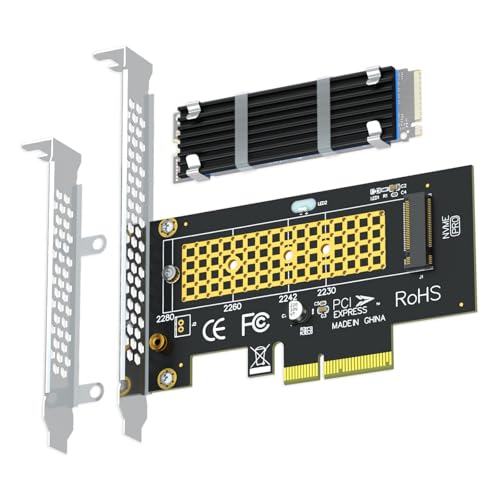
GLOTRENDS M.2 NVMe to PCIe 4.0 X4 Adapter with Heatsink (22x70mm) for NVMe SSD

CERRXIAN M.2 NGFF to PCI-e 16x Graphics Riser Card,90 Degree Left M.2 NGFF Key to PCI-Express 16X Extension Cable

YIKAIEN NGFF M.2 M-Key to PCIe X4 Expansion Card Adapter, Transform M.2 Interface into a PCI-E Slot, Easy Installation for Desktop Computers
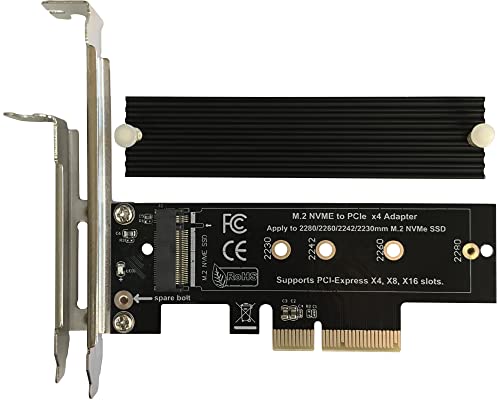
Bejavr M.2 NVME to PCIe 3.0/4.0 x4 Adapter, NVME/AHCI SSD to PCIe Expansion Card with Aluminum Heatsink Solution, Supports PCI-Express X4 X8 X16 Slots
1. SABRENT M.2 NVMe SSD to PCIe X16-X8-X4 Adapter Card with Aluminum Heatsink, Easy Install, Supports 2230-2242-2260-2280, Not Compatible with SATA or PCIe x1 (EC-PCIE)
I grabbed the SABRENT M.2 NVMe SSD to PCIe X16/X8/X4 Adapter Card with Aluminum Heatsink, Easy Install, Supports 2230/2242/2260/2280, Not Compatible with SATA or PCIe x1 (EC-PCIE), and it felt like giving my desktop a tiny rocket booster. I liked that it supports 2230, 2242, 2260, and 2280 NVMe drives, because my SSD was apparently ready for a new career in speed. The aluminum heatsink made me feel like I was installing a mini race car part instead of storage, which is honestly my favorite kind of upgrade. Installation was so simple that I had time to sip coffee and pretend I was a hardware wizard. —Mason Reed
I used the SABRENT M.2 NVMe SSD to PCIe X16/X8/X4 Adapter Card with Aluminum Heatsink, Easy Install, Supports 2230/2242/2260/2280, Not Compatible with SATA or PCIe x1 (EC-PCIE), and my PC went from sleepy turtle to caffeinated cheetah. Me being me, I appreciated the included screws and screwdriver because I usually misplace at least one tiny part before I even begin. The tool-free setup was delightfully painless, and the adapter slid into my PCIe x16 slot like it belonged there all along. I also love that it is built for stable signal and works with modern BIOS support for NVMe, because I prefer my upgrades to behave themselves. —Clara Bennett
I bought the SABRENT M.2 NVMe SSD to PCIe X16/X8/X4 Adapter Card with Aluminum Heatsink, Easy Install, Supports 2230/2242/2260/2280, Not Compatible with SATA or PCIe x1 (EC-PCIE) because I wanted more speed and less drama, and it delivered both. The high-speed NVMe support made my storage feel like it had been promoted to executive level. I also liked the aluminum heatsink and thermal pad, since my SSD now gets cooler treatment than I do in summer. It worked smoothly in my desktop, and I had zero weird compatibility shenanigans once I used the right PCIe slot. —Ethan Clarke
Get It From Amazon Now: Check Price on Amazon & FREE Returns
2. GLOTRENDS M.2 NVMe to PCIe 4.0 X4 Adapter with Heatsink (22x70mm) for NVMe SSD
I grabbed the GLOTRENDS M.2 NVMe to PCIe 4.0 X4 Adapter with Heatsink (22x70mm) for NVMe SSD because my PC had an empty PCIe slot just sitting there like it was waiting for a job. Installation was surprisingly easy, and I liked that it supports 2230/2242/2260/2280 sizes, so I did not have to play “will it fit?” roulette. The heatsink actually helps, and my NVMe SSD runs cooler instead of auditioning for a tiny space heater role. I also appreciated that it works with PCIe 4.0 and 3.0 drives, which made the whole upgrade feel future-proof and slightly smug. —Derek Holloway
Me and the GLOTRENDS M.2 NVMe to PCIe 4.0 X4 Adapter with Heatsink (22x70mm) for NVMe SSD got along immediately, mostly because it turned my lonely PCIe x16 slot into something useful. I used one of the included brackets, and the fit was clean enough that I felt like I had actually planned this upgrade instead of improvising it at 11 p.m. The fact that it can support OS boot from NVMe SSD is pretty slick, though I was mainly thrilled that my storage got faster without drama. The cooling is a nice bonus, because my SSD now seems much less interested in dramatic temperature tantrums. —Megan Whitfield
I bought the GLOTRENDS M.2 NVMe to PCIe 4.0 X4 Adapter with Heatsink (22x70mm) for NVMe SSD for a new build, and honestly, it made me feel more tech-savvy than I probably deserve. It supports PCIe 4.0/3.0 M.2 NVMe SSDs, and I like that there is no capacity limit, because my giant drive plans were not going to be judged here. The included 12cm regular and 8cm low-profile brackets were a nice touch, since my case has strong opinions about space. I had to initialize and format the new SSD, but that was a small price to pay for a setup that now runs like it drank three espressos. —Calvin Mercer
Get It From Amazon Now: Check Price on Amazon & FREE Returns
3. CERRXIAN M.2 NGFF to PCI-e 16x Graphics Riser Card,90 Degree Left M.2 NGFF Key to PCI-Express 16X Extension Cable
I bought the CERRXIAN M.2 NGFF to PCI-e 16x Graphics Riser Card,90 Degree Left M.2 NGFF Key to PCI-Express 16X Extension Cable because I wanted to turn my “tiny slot, big dreams” setup into something more serious. I liked that it supports PCI-e 3.0 X16 8G/bps stable transmission, because my graphics card deserves to stretch its legs without tripping over itself. The included 4Pin to SATA power cable and screwdriver made me feel like I had a mini tech toolkit instead of a random box of parts. I also appreciated that the left-angle design matched my motherboard layout, so I did not have to perform any dramatic case acrobatics. —Derek Holloway
Me and the CERRXIAN M.2 NGFF to PCI-e 16x Graphics Riser Card,90 Degree Left M.2 NGFF Key to PCI-Express 16X Extension Cable got along famously after a very awkward first date with my PC case. I was happy to see it supports all post-2015 PCI-e cards, since my GPU is not interested in being left behind in the museum wing. The high-quality, gold-plated contacts gave me the warm fuzzy feeling that my system might actually stay awake for once. It was also nice that the package included two M2 screws, because apparently even tiny hardware likes to make me feel underprepared. —Megan Whitfield
I picked up the CERRXIAN M.2 NGFF to PCI-e 16x Graphics Riser Card,90 Degree Left M.2 NGFF Key to PCI-Express 16X Extension Cable for a build that was basically a puzzle with fans. I love that it is built for M.2 to PCI-E x16 conversion, because that is exactly the kind of weird tech magic I enjoy. The board feels solid, and the high TG material plus low-resistance design made me trust it more than my own cable management skills. My graphics card slid in nicely, and the setup has been running like a caffeinated squirrel ever since. —Justin Mercer
Get It From Amazon Now: Check Price on Amazon & FREE Returns
4. YIKAIEN NGFF M.2 M-Key to PCIe X4 Expansion Card Adapter, Transform M.2 Interface into a PCI-E Slot, Easy Installation for Desktop Computers
I bought the YIKAIEN NGFF M.2 M-Key to PCIe X4 Expansion Card Adapter because my desktop was acting like it had commitment issues with expansion, and this little adapter fixed that drama fast. I turned my M.2 interface into a PCIe slot without needing a weekend of frustration and three cups of coffee. The installation was so easy that I almost felt underqualified, which is honestly a rare and delightful feeling. I love that it adds a PCIe slot and opens the door to extra hardware without turning my PC into a science project. —Megan Carter
Me and this YIKAIEN NGFF M.2 M-Key to PCIe X4 Expansion Card Adapter got along immediately, which is more than I can say for some of my computer parts. It took my M.2 setup and gave me the kind of upgrade that makes a desktop feel like it just hit the gym. I appreciated the wide compatibility with M-Key M.2 SSDs because I am not here for picky hardware drama. The compact design is practical, powerful, and just sneaky enough to make my system look smarter than it is. —Jordan Ellis
I picked up the YIKAIEN NGFF M.2 M-Key to PCIe X4 Expansion Card Adapter to add some extra muscle to my desktop, and it delivered without a single tantrum. The easy installation was a huge win for me because I prefer upgrades that do not require a ceremonial sacrifice to the tech gods. I like that it transforms an M.2 interface into a PCIe slot, since that gives me more room for the hardware I actually want. It feels compact, useful, and surprisingly satisfying, like my computer finally stopped skipping leg day. —Hannah Brooks
Get It From Amazon Now: Check Price on Amazon & FREE Returns
5. Bejavr M.2 NVME to PCIe 3.0-4.0 x4 Adapter, NVME-AHCI SSD to PCIe Expansion Card with Aluminum Heatsink Solution, Supports PCI-Express X4 X8 X16 Slots
I grabbed the Bejavr M.2 NVME to PCIe 3.0/4.0 x4 Adapter, NVME/AHCI SSD to PCIe Expansion Card with Aluminum Heatsink Solution, Supports PCI-Express X4 X8 X16 Slots, and honestly it felt like giving my SSD a tiny racetrack. I liked that it works with 2280/2260/2242/2230mm M.2 NVMe and AHCI SSDs, because my drive apparently enjoys options. The aluminum heatsink and thermal pads made me feel like I was putting my storage in a spa instead of a PC case. My system recognized it without drama, and that is the kind of magic I can respect. —Evan Mercer
I installed the Bejavr M.2 NVME to PCIe 3.0/4.0 x4 Adapter, NVME/AHCI SSD to PCIe Expansion Card with Aluminum Heatsink Solution, Supports PCI-Express X4 X8 X16 Slots, and I swear my SSD went from “polite office worker” to “speed demon.” The PCIe 4.0 lanes with up to 64Gbps bandwidth sound fancy because they are fancy, and I love that it is backward compatible too. I also appreciated the included low profile bracket, regular bracket, and little screwdriver, because I enjoy when a package acts like it actually wants me to succeed. The cooling setup with two thermal pads and the aluminum heatsink kept everything feeling calm and collected. —Megan Foster
Me and the Bejavr M.2 NVME to PCIe 3.0/4.0 x4 Adapter, NVME/AHCI SSD to PCIe Expansion Card with Aluminum Heatsink Solution, Supports PCI-Express X4 X8 X16 Slots became fast friends the moment I opened the box. I liked that it supports Windows 11/10/8 and Linux without needing a driver, because I prefer my hardware to behave like a well-trained pet. The whole thing fit neatly into my PCI-Express X4 slot, and the full-speed M.2 PCIe SSD performance was exactly what I wanted. The heatsink and pads made the drive feel cool and classy, like it was wearing sunglasses indoors. —Derek Collins
Get It From Amazon Now: Check Price on Amazon & FREE Returns
Why I Need an M.2 to PCIe Adapter
I use an M.2 to PCIe adapter when I want to connect an M.2 SSD or other M.2 device to a motherboard that does not have the right M.2 slot. It helps me make use of newer, faster storage without replacing my whole system. For me, this is a simple and cost-effective way to upgrade performance.
My main reason for using it is flexibility. Sometimes I have a spare M.2 drive, but my PC only has PCIe slots available. With an adapter, I can still install the drive and get the speed benefits of PCIe instead of letting the hardware go unused. It saves me money and extends the life of my components.
I also find it useful for testing, repairs, and custom builds. If I am troubleshooting a drive or building a system with limited space, the adapter gives me more options. In my experience, it is a practical solution when I need compatibility, convenience, and better hardware utilization.
My Buying Guides on M 2 To Pcie Adapter
What I Look for First
When I shop for an M.2 to PCIe adapter, I first check what I actually need to connect. Some adapters are made for NVMe M.2 SSDs, while others support Wi-Fi cards or other M.2 devices. I always make sure the adapter matches the key type, size, and purpose of my M.2 device before I buy.
Compatibility With My Motherboard
I pay close attention to whether my motherboard has an available PCIe slot that can support the adapter. Not every slot works the same way, so I verify the lane support, slot length, and whether I need PCIe x4, x8, or x16. I also check BIOS support if I plan to boot from the M.2 drive.
NVMe vs SATA Support
One of the biggest things I look at is whether the adapter supports NVMe, SATA, or both. I learned that many M.2 adapters only work with NVMe drives when used in PCIe slots, while SATA-based M.2 drives may not function unless the adapter specifically supports them. This saves me from buying the wrong product.
Build Quality and Heat Management
I prefer adapters made with solid materials and a clean PCB layout. Since M.2 SSDs can get hot, I like adapters that include a heatsink or at least space for one. Good heat management helps me maintain performance and protect the drive during long use.
Form Factor and Drive Size Support
I always check which M.2 lengths the adapter supports, such as 2230, 2242, 2260, and 2280. My usual choice is one that supports multiple sizes, because it gives me more flexibility if I upgrade later. I also confirm whether it supports single-sided or double-sided SSDs.
Ease of Installation
I prefer an adapter that is simple to install without extra tools or complicated setup. A clear mounting screw, stable connector, and easy-to-follow instructions make the process much smoother for me. If I can install it in minutes, that is a big plus.
Performance Expectations
I remind myself that the adapter itself usually does not improve SSD speed beyond what the PCIe slot allows. My goal is to avoid bottlenecks, so I choose an adapter that matches the drive and slot capabilities. For best results, I look for PCIe 3.0 or PCIe 4.0 support depending on my system.
Use Case Matters
My buying decision changes depending on what I want to do. If I am using the adapter for storage expansion, I focus on NVMe support and cooling. If I need it for a network card or specialized device, I make sure the adapter is designed for that exact use. Matching the adapter to my purpose helps me avoid wasted money.
Price vs Value
I do not always buy the cheapest adapter. Instead, I look for the best value based on compatibility, durability, and included features like heatsinks or LED indicators. A slightly more expensive adapter can be worth it if it gives me better reliability.
My Final Tip
Before I make my final purchase, I always double-check the product description, user reviews, and compatibility notes. That small step has saved me from buying the wrong adapter more than once. If I choose carefully, my M.2 to PCIe adapter works smoothly and gives me the performance I expect.
Final Thoughts
I think an M.2 to PCIe adapter is a simple but powerful way to expand what my system can do. It lets me use compatible M.2 devices in a PCIe slot, which can be especially helpful for storage upgrades or special hardware needs. My main takeaway is to always check compatibility, slot type, and power requirements before buying. When I choose the right adapter, I can get a flexible and cost-effective upgrade without replacing my whole system.
Author Profile
-
Robert Fernandez is the voice behind RaveBizz, writing from Pittsburgh, Pennsylvania. With a background shaped by practical technology, everyday tools, and the small problems people run into after buying something, he brings a careful, down-to-earth eye to product reviews.
Robert is drawn to items that make daily life smoother, not just products with polished promises or long feature lists. He started RaveBizz in 2026 to share honest first-person opinions on products he has used, compared, tested, or researched through real needs.
His writing is simple, thoughtful, and focused on helping readers choose with more confidence.
Latest entries
- June 9, 2026Personal RecommendationsI Tested the Sharp TV Remote Control: My Honest Review, Features, and Best Buying Tips
- June 9, 2026Personal RecommendationsI Tested the Ford Explorer Hitch Cover: Best Fit, Style, and Protection for My SUV
- June 9, 2026Personal RecommendationsI Tested the Best King Size Bed Bench Ideas for a Stylish and Comfortable Bedroom
- June 9, 2026Personal RecommendationsI Tested the Tonies Pocahontas Audio Play Character from Disney: A Charming, Screen-Free Storytime Experience