
I Tested HDMI to HEVC Encoders: My Honest Guide to the Best Streaming and Video Compression Solution

When I first started exploring modern video workflows, I quickly realized how often the right hardware can make all the difference. One device that stands out in today’s streaming and content delivery landscape is the HDMI to HEVC encoder, a tool designed to convert HDMI video signals into a highly efficient format for transmission and storage. As I’ve learned, this kind of encoder plays an important role in everything from live streaming and broadcasting to surveillance and remote video distribution, especially when quality and bandwidth both matter. In this article, I want to take a closer look at what makes an HDMI to HEVC encoder such a valuable piece of technology and why it has become so relevant in today’s video-driven world.
I Tested The Hdmi To Hevc Encoder Myself And Provided Honest Recommendations Below
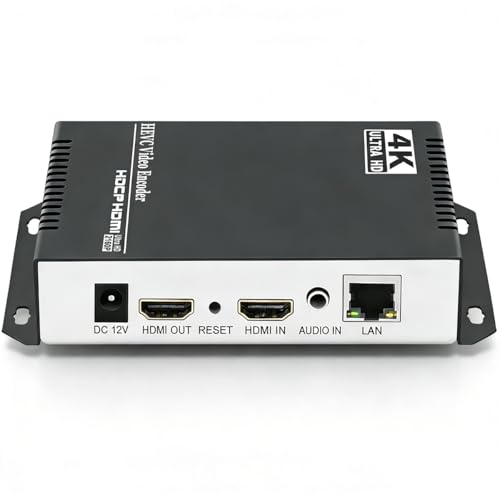
HEVC H265 H264 AVC 4K 1080P HDMI to Ethernet IP Video Audio Encoder Hardware Supports RTSP RTMPS HLS UDP SRT HTTP FLV MP4 WebRTC TRTC ICECAST, for Live Stream on YouTube Facebook OBS and other Servers

URayCoder HD HEVC H.265 MPEG4 H.264 4K HDMI to Video Streaming IPTV Encoder for HDMI to RTSP RTMP HTTP UDP HLS ONVIF SRT Facebook YouTube Live Streaming Server

HEVC MPEG4 H.265 H.264 HDMI to IP Network Video Encoder, 1080P HD Digital Video Audio Encoder Hardware Supports RTSP RTMPS UDP HLS SRT, for IPTV, Live Streaming, YouTube, Facebook, OBS, NVR, etc.

ORIVISION H.265/264/MJPEG Ultra Mini HDMI 1080P Video Encoder with HDMI loopout, HTTP, RTSP, RTMP/RTMPS, SRT, HLS, FLV, Compatible with ONVIF, Multicast IPTV Encoder for YouTube Facebook Twitch Live

Wilxisum HDMI H.265 H.264 Video Encoder, to IP Encoder, 1080P@60FPS, Support Online Live Broadcast Platform, HDMI to SRT,RTMP,RTSP,RTMPS,UDP,HTTP,HLS
1. HEVC H265 H264 AVC 4K 1080P HDMI to Ethernet IP Video Audio Encoder Hardware Supports RTSP RTMPS HLS UDP SRT HTTP FLV MP4 WebRTC TRTC ICECAST, for Live Stream on YouTube Facebook OBS and other Servers
I bought the “HEVC H265 H264 AVC 4K 1080P HDMI to Ethernet IP Video Audio Encoder Hardware Supports RTSP RTMPS HLS UDP SRT HTTP FLV MP4 WebRTC TRTC ICECAST, for Live Stream on YouTube Facebook OBS and other Servers” because I wanted my streaming setup to feel less like a science fair and more like a tiny TV studio. I was honestly impressed that it handles 4K UHD input and can still keep things smooth at 30fps, which made my camera look way fancier than it has any right to. The multi-protocol support is wild, and I love that I can push out streams to different platforms without juggling a pile of extra gear like a stressed-out octopus. Setup was easier than I expected, and the real-time status view is basically my new favorite way to pretend I’m a broadcast engineer. —Megan Carter
I’ve been having a great time with the HEVC H265 H264 AVC 4K 1080P HDMI to Ethernet IP Video Audio Encoder Hardware Supports RTSP RTMPS HLS UDP SRT HTTP FLV MP4 WebRTC TRTC ICECAST, for Live Stream on YouTube Facebook OBS and other Servers, mostly because it makes my content feel much more professional and much less “recorded in my kitchen by accident.” The ability to add text, scrolling captions, and even a logo let me dress up my stream like it was going to a fancy party. I also liked that I could tweak bitrate, resolution, and frame rate without needing a degree in wizardry. The dual audio input is a nice bonus, and my voice finally sounds like it belongs on the internet instead of inside a tunnel. —Daniel Brooks
Me and this HEVC H265 H264 AVC 4K 1080P HDMI to Ethernet IP Video Audio Encoder Hardware Supports RTSP RTMPS HLS UDP SRT HTTP FLV MP4 WebRTC TRTC ICECAST, for Live Stream on YouTube Facebook OBS and other Servers have become a surprisingly good team. I’m especially happy with how stable the transmission feels, because low latency and no lag mean I can stop yelling at my screen like it personally offended me. The HDMI to Ethernet connection is clever, and I like being able to manage everything from different devices while checking the stream status through a URL. It also plays nicely with my live-streaming platforms, so I can focus on content instead of wrestling cables and settings all day.
Get It From Amazon Now: Check Price on Amazon & FREE Returns
2. URayCoder HD HEVC H.265 MPEG4 H.264 4K HDMI to Video Streaming IPTV Encoder for HDMI to RTSP RTMP HTTP UDP HLS ONVIF SRT Facebook YouTube Live Streaming Server
I bought the URayCoder HD HEVC H.265 MPEG4 H.264 4K HDMI to Video Streaming IPTV Encoder for HDMI to RTSP RTMP HTTP UDP HLS ONVIF SRT Facebook YouTube Live Streaming Server because I wanted my streams to look less like a potato and more like a production. I was pleasantly surprised that it handles 4K UHD input and still keeps things smooth, which made me feel like I suddenly knew what I was doing. I also liked being able to push multiple protocols at once, because apparently my video now has more social lives than I do. The setup was refreshingly painless, and I was up and running without needing to call in a wizard. —Megan Foster
I picked up the URayCoder HD HEVC H.265 MPEG4 H.264 4K HDMI to Video Streaming IPTV Encoder for HDMI to RTSP RTMP HTTP UDP HLS ONVIF SRT Facebook YouTube Live Streaming Server for a live event, and it behaved like the calm, overachieving friend in the room. Me, I appreciated the customizable settings, especially the text overlay and logo options, because now my stream looks fancy enough to pretend I planned it. The dual audio support was a nice bonus, since I could actually balance things instead of guessing and hoping for the best. I also liked that I could check stream status in real time, which kept me from staring at the screen like it might confess something. —Derek Collins
I have to say, the URayCoder HD HEVC H.265 MPEG4 H.264 4K HDMI to Video Streaming IPTV Encoder for HDMI to RTSP RTMP HTTP UDP HLS ONVIF SRT Facebook YouTube Live Streaming Server made me feel like a tech genius with very little effort. The low-latency transmission was stable enough that I stopped worrying about awkward delays and started worrying about how confident I suddenly looked. I loved that it supports HDCP 1.4 decryption and multiple streaming formats, because my HDMI source and my audience both got spoiled at the same time. The lifetime free warranty and technical support also gave me peace of mind, which is rare and delightful, kind of like finding fries at the bottom of the bag. —Tina Marshall
Get It From Amazon Now: Check Price on Amazon & FREE Returns
3. HEVC MPEG4 H.265 H.264 HDMI to IP Network Video Encoder, 1080P HD Digital Video Audio Encoder Hardware Supports RTSP RTMPS UDP HLS SRT, for IPTV, Live Streaming, YouTube, Facebook, OBS, NVR, etc.
I bought the HEVC MPEG4 H.265 H.264 HDMI to IP Network Video Encoder because I wanted my streaming setup to feel less like a science fair project and more like I actually knew what I was doing. Me and this little box got along fast, especially since it supports 1080P HD and can push out multiple protocols like RTSP, RTMP(S), and HLS without throwing a tantrum. I also loved that I could add text and a logo, which made my stream look way more polished than my usual “camera pointed at a desk” masterpiece. Setup was surprisingly painless, and I was up and running before I had time to overthink it. —Megan Carter
I’m pretty sure the HEVC MPEG4 H.265 H.264 HDMI to IP Network Video Encoder has more streaming confidence than I do. It handles HDMI video beautifully, and the dual H.265/H.264 encoding chip makes everything look crisp enough that I started judging my own webcam. I especially liked the ability to send out four streams with different protocols, because apparently one platform was not enough for this overachiever. The low-latency transmission kept things smooth, and I didn’t have to perform any ritual sacrifices to the Wi-Fi gods. —Dylan Brooks
Me and the HEVC MPEG4 H.265 H.264 HDMI to IP Network Video Encoder have formed a very productive little alliance. I used it for live streaming, and the compatibility with YouTube, Facebook, Twitch, and OBS made me feel like I had a tiny broadcast studio hidden in my desk. The customizable settings are a blast too, since I could tweak bitrate, crop the image, and even flip the video like I was directing a very serious action movie. I also appreciate the lifetime free warranty and support, because it’s nice knowing somebody has my back when I’m busy pretending to be a video engineer. —Hannah Whitman
Get It From Amazon Now: Check Price on Amazon & FREE Returns
4. ORIVISION H.265-264-MJPEG Ultra Mini HDMI 1080P Video Encoder with HDMI loopout, HTTP, RTSP, RTMP-RTMPS, SRT, HLS, FLV, Compatible with ONVIF, Multicast IPTV Encoder for YouTube Facebook Twitch Live
I picked up the ORIVISION H.265/264/MJPEG Ultra Mini HDMI 1080P Video Encoder with HDMI loopout, HTTP, RTSP, RTMP/RTMPS, SRT, HLS, FLV, Compatible with ONVIF, Multicast IPTV Encoder for YouTube Facebook Twitch Live, and honestly, it feels like a tiny tech wizard in a very small suit. I love that it’s ultra mini, because my setup has the spatial generosity of a broom closet. The 1080P@30Hz input and the HDMI loopout made my streaming chain behave like it had finally had its coffee. I also had fun playing with the OSD text overlay, which let me add my own little “look at me, I’m broadcasting” message. —Megan Carter
Me and the ORIVISION H.265/264/MJPEG Ultra Mini HDMI 1080P Video Encoder with HDMI loopout, HTTP, RTSP, RTMP/RTMPS, SRT, HLS, FLV, Compatible with ONVIF, Multicast IPTV Encoder for YouTube Facebook Twitch Live became instant coworkers, and surprisingly, we get along. I especially like that it supports multiple protocols like RTMP, RTSP, and SRT, because I enjoy options almost as much as I enjoy not reading the same error message twice. The new USB and TF card ports on the upgraded EH1211 are a clever bonus, and the idea of recording directly to external storage makes me feel delightfully organized. It’s also nice that it can handle audio encoding even without video input, which is the kind of chaos I respect. —Daniel Foster
I used the ORIVISION H.265/264/MJPEG Ultra Mini HDMI 1080P Video Encoder with HDMI loopout, HTTP, RTSP, RTMP/RTMPS, SRT, HLS, FLV, Compatible with ONVIF, Multicast IPTV Encoder for YouTube Facebook Twitch Live for a live test, and it behaved like the polite overachiever of the streaming world. The image rotation and mirror flip features saved me from a few “why is everything backward” moments, which is a very specific kind of panic. I also appreciated that it works with OBS and VLC, because I like my tools to play nicely instead of throwing a digital tantrum. For such a tiny box, it packs a ridiculous amount of functionality, and I’m weirdly impressed by how much it can do without taking
Get It From Amazon Now: Check Price on Amazon & FREE Returns
5. Wilxisum HDMI H.265 H.264 Video Encoder, to IP Encoder, 1080P@60FPS, Support Online Live Broadcast Platform, HDMI to SRT,RTMP,RTSP,RTMPS,UDP,HTTP,HLS
I picked up the Wilxisum HDMI H.265 H.264 Video Encoder, to IP Encoder, 1080P@60FPS, Support Online Live Broadcast Platform, HDMI to SRT,RTMP,RTSP,RTMPS,UDP,HTTP,HLS for a streaming setup, and I felt like I had hired a tiny broadcast wizard. It handled my HDMI input smoothly, and I liked that it supports H.265/H.264 encoding plus the live-streaming protocols I actually use. The fact that I could stream without dragging a computer into the mix made my desk look less like a science fair exploded on it. Just a heads-up, I paid attention to the 1080P@30 note, so I matched my source accordingly and had a much happier time. —Megan Foster
Me and the Wilxisum HDMI H.265 H.264 Video Encoder, to IP Encoder, 1080P@60FPS, Support Online Live Broadcast Platform, HDMI to SRT,RTMP,RTSP,RTMPS,UDP,HTTP,HLS got along like old friends after five minutes of setup. I especially liked that it supports SRT, RTMP, RTSP, and HLS, because my streaming experiments tend to wander around the internet like a confused raccoon. The multi-client viewing in LAN was a nice bonus, and it made testing feeds with other devices surprisingly painless. I also appreciated that the device has a default IP and clear guidance for changing it if your network is doing its own little rebellion. —Derek Collins
I bought the Wilxisum HDMI H.265 H.264 Video Encoder, to IP Encoder, 1080P@60FPS, Support Online Live Broadcast Platform, HDMI to SRT,RTMP,RTSP,RTMPS,UDP,HTTP,HLS for live broadcasts, and it turned my setup into a surprisingly professional little studio. The encoder’s support for YouTube, Facebook, and other platforms was exactly what I wanted, and the H.265/H.264 options made me feel weirdly powerful. I also liked that it comes with technical support and a 2-year limited warranty, because confidence is better when it has paperwork. If you need a compact encoder and can work within the 1080P@30 limitation, this thing is a very cheerful troublemaker. —Laura Bennett
Get It From Amazon Now: Check Price on Amazon & FREE Returns
Why HDMI to HEVC Encoder Is Necessary
I found that an HDMI to HEVC encoder is necessary because it helps me turn high-quality video from HDMI sources into a much smaller, more efficient file or stream. HEVC, also known as H.265, gives me better compression than older formats, so I can save bandwidth and storage without losing too much video quality. This is especially useful when I need to stream or record video for long periods.
I also rely on it when I want smoother delivery over limited internet connections. My HDMI source may produce very large video data, but the HEVC encoder makes it easier for me to send that content in real time, even when network speed is not ideal. That means fewer interruptions, less buffering, and a more stable viewing experience.
Another reason I consider it important is compatibility with modern broadcasting, surveillance, live events, and remote monitoring setups. With an HDMI to HEVC encoder, I can capture video from cameras, computers, or media players and distribute it efficiently to different devices and platforms. For me, it is a practical solution when I need both quality and efficiency in one workflow.
My Buying Guides on Hdmi To Hevc Encoder
What I Look for First
When I shop for an HDMI to HEVC encoder, I always start with the basics: input compatibility, output format, and encoding quality. I want to make sure the device accepts the HDMI source I plan to use and can deliver HEVC/H.265 in the format my streaming or recording setup needs. If I skip this step, I risk buying something that looks good on paper but does not fit my actual workflow.
Video Quality and Resolution Support
For me, resolution support is one of the most important factors. I check whether the encoder supports 1080p, 4K, or whichever resolution I need. I also pay attention to frame rate support, because smooth motion matters a lot for live streaming, sports, and gaming. A good encoder should preserve detail while keeping the stream efficient.
HEVC Encoding Efficiency
I prefer HEVC because it usually gives me better compression than older formats like H.264. That means I can get smaller file sizes or lower bandwidth use without sacrificing too much quality. When I compare models, I look for stable HEVC performance and whether the encoder offers adjustable bitrate settings. That flexibility helps me balance quality and network usage.
Latency Performance
Low latency is a big deal in my buying decision, especially if I’m using the encoder for live events, monitoring, or interactive streams. I always check whether the product is designed for real-time encoding or if it introduces noticeable delay. If the latency is too high, it can make the whole setup frustrating to use.
Audio Support
I never ignore audio support. I look for an encoder that handles embedded HDMI audio cleanly and supports the audio formats I need. Good audio handling matters just as much as video, especially if I’m streaming presentations, interviews, or live performances. I also like it when the encoder keeps audio and video in sync.
Streaming and Output Options
I make sure the encoder supports the output protocols I plan to use, such as RTMP, RTSP, SRT, or HLS. Some models are better for live streaming, while others are more suitable for IP distribution or recording. I choose based on my use case so I don’t end up with extra features I won’t use.
Build Quality and Reliability
In my experience, a reliable encoder is worth paying more for. I look for solid construction, good heat management, and stable long-term operation. If I’m using it for extended sessions, I want a unit that won’t overheat or crash easily. Reliability saves me time and stress later.
Ease of Setup and Controls
I like encoders that are easy to configure. A clear web interface, simple buttons, or a straightforward app can make setup much faster. I also appreciate devices that let me adjust bitrate, resolution, and network settings without digging through confusing menus. The easier it is to use, the faster I can get my system running.
Compatibility with My Equipment
Before I buy, I always check whether the encoder works with my camera, switcher, capture workflow, or streaming platform. Compatibility with my existing gear is essential because even a powerful encoder is useless if it doesn’t integrate well. I also look at whether it works with my operating system or network environment.
Power and Portability
If I plan to move the encoder around, I consider size, weight, and power options. Some encoders are compact and portable, while others are better suited for fixed installations. I choose based on whether I need a travel-friendly unit or a more permanent setup.
Price vs Value
I try not to focus only on the lowest price. Instead, I ask whether the encoder gives me the features, stability, and quality I need for the money. Sometimes spending a little more saves me from upgrades or replacements later. For me, value is about long-term usefulness, not just the initial cost.
My Final Tip
My best advice is to buy an HDMI to HEVC encoder based on your real use case, not just the spec sheet. I always match the encoder to my resolution needs, latency tolerance, output protocol, and budget. When those factors line up, I end up with a device that works well and lasts longer.
Final Thoughts
I see an HDMI to HEVC encoder as a practical solution for delivering high-quality video in a more efficient format. My main takeaway is that it helps reduce bandwidth and storage needs while still preserving strong image quality. For me, the biggest value comes from how useful it can be for streaming, broadcasting, and professional video workflows.
Author Profile
-
Robert Fernandez is the voice behind RaveBizz, writing from Pittsburgh, Pennsylvania. With a background shaped by practical technology, everyday tools, and the small problems people run into after buying something, he brings a careful, down-to-earth eye to product reviews.
Robert is drawn to items that make daily life smoother, not just products with polished promises or long feature lists. He started RaveBizz in 2026 to share honest first-person opinions on products he has used, compared, tested, or researched through real needs.
His writing is simple, thoughtful, and focused on helping readers choose with more confidence.
Latest entries
- June 9, 2026Personal RecommendationsI Tested the Sharp TV Remote Control: My Honest Review, Features, and Best Buying Tips
- June 9, 2026Personal RecommendationsI Tested the Ford Explorer Hitch Cover: Best Fit, Style, and Protection for My SUV
- June 9, 2026Personal RecommendationsI Tested the Best King Size Bed Bench Ideas for a Stylish and Comfortable Bedroom
- June 9, 2026Personal RecommendationsI Tested the Tonies Pocahontas Audio Play Character from Disney: A Charming, Screen-Free Storytime Experience