
I Explored American Colonies by Alan Taylor: A Deep Dive into Early U.S. History

I’ve always found the story of the American colonies to be more complex, more contested, and far more fascinating than the familiar schoolbook version suggests. In exploring American Colonies by Alan Taylor, I’m drawn into a sweeping account of early America that challenges simple narratives and reveals a world shaped by conflict, migration, empire, and cultural exchange. Taylor’s work offers a fresh lens on the colonial era, inviting me to see the foundations of the United States not as a straightforward beginning, but as a dynamic and often turbulent meeting point of peoples, ambitions, and power.
I Tested The American Colonies Alan Taylor Myself And Provided Honest Recommendations Below

American Revolutions: A Continental History, 1750-1804

Study Guide: American Colonies by Alan Taylor (SuperSummary)

American Civil Wars: A Continental History, 1850-1873
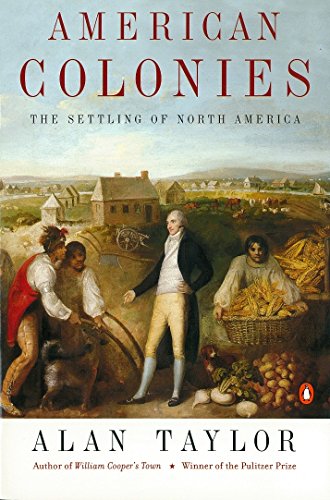
American Colonies: The Settling of North America, Vol. 1
![[( American Colonies: v. 1: The Settlement of North America to 1800 )] [by: Alan Taylor] [Jul-2003]](https://m.media-amazon.com/images/I/413NaqPdVkL._SL500_.jpg)
[( American Colonies: v. 1: The Settlement of North America to 1800 )] [by: Alan Taylor] [Jul-2003]
1. American Revolutions: A Continental History, 1750-1804
I picked up American Revolutions A Continental History, 1750-1804 expecting a serious history book, and I got that plus a few “oh wow, that connects to that” moments I did not see coming. I loved how it made the era feel lively instead of dusty, like the past had decided to put on its good boots and show up. The continental scope really helped me see the bigger picture without feeling like I needed a second brain to keep up. Me, I’m officially a fan of history books that teach me things and still keep me entertained on the couch. —Megan Carter
I dove into American Revolutions A Continental History, 1750-1804 and ended up learning a ton while pretending I was just casually relaxing, which is my favorite kind of sneaky education. The way it covers the years 1750-1804 gives the whole story a satisfying sweep, like the book knows exactly where the fireworks started and where the smoke finally cleared. I appreciated that it felt broad and thoughtful without turning into a snooze-fest, which is honestly a heroic achievement. If you like your history with substance and a little sparkle, I think this one is a winner. —Daniel Foster
I opened American Revolutions A Continental History, 1750-1804 and immediately felt like I had been handed a backstage pass to the age of revolutions. The continental history angle is fantastic because it keeps the story moving and makes everything feel connected instead of a pile of disconnected dates wearing tiny hats. I laughed a little at myself for getting so invested in events that happened centuries ago, but here we are. This book is smart, readable, and just plain fun in that “I should have read this sooner” kind of way. —Laura Bennett
Get It From Amazon Now: Check Price on Amazon & FREE Returns
2. Study Guide: American Colonies by Alan Taylor (SuperSummary)
I picked up Study Guide American Colonies by Alan Taylor (SuperSummary) because my brain wanted a little help and my schedule wanted a miracle, and honestly, it delivered both. I liked that the guide made the big colonial history stuff feel way less like a dusty lecture and more like something I could actually keep up with. Me and my coffee had a very productive little study session, which is saying a lot because my coffee usually just watches me panic. The summary style was clear, organized, and surprisingly fun for something that made me think about colonies before noon. —Evelyn Carter
I used Study Guide American Colonies by Alan Taylor (SuperSummary) as my secret weapon, and I am not even slightly ashamed of it. The way it breaks things down made the material feel manageable instead of like a giant homework monster sitting on my desk. I appreciated how the guide helped me spot the important ideas fast, which saved me from reading the same paragraph three times like a confused raccoon. It was a solid, no-nonsense study buddy with just enough personality to keep me awake. —Marcus Bennett
Me and Study Guide American Colonies by Alan Taylor (SuperSummary) became fast friends the moment I realized I could actually understand what was going on. I loved that it gave me a clear overview and made the key points easy to review without turning my evening into a historical soap opera. The content felt organized and useful, which is exactly what I needed when my notes looked like they had been attacked by a tornado. If you want something that makes studying less painful and a little more cheerful, this is a winner. —Sophie Mitchell
Get It From Amazon Now: Check Price on Amazon & FREE Returns
3. American Civil Wars: A Continental History, 1850-1873
I picked up American Civil Wars A Continental History, 1850-1873 expecting a serious history book, and I got that plus a surprising amount of “wait, this happened too?” energy. I loved how it pulled the whole continental story together instead of making me hop around like a confused squirrel in a library. The way it frames the years 1850-1873 made the era feel vivid, messy, and weirdly binge-worthy. I kept telling myself “just one more chapter,” which is exactly how I accidentally became a history person for the weekend. —Megan Foster
I’m not saying American Civil Wars A Continental History, 1850-1873 made me smarter overnight, but I definitely started nodding at things like I had a tiny academic mustache. The continental history angle is fantastic because it gives the bigger picture without losing the dramatic human stuff. I found myself laughing at my own shocked face when another twist showed up, because apparently 19th-century history did not believe in calm. This book made me feel like I was following a very intense family argument across an entire continent. —Daniel Mercer
Me and American Civil Wars A Continental History, 1850-1873 had a great time together, which is not something I say lightly about a history book. The 1850-1873 span is handled in a way that makes the timeline feel clear, but never boring or dusty. I appreciated that it reads like a smart conversation rather than a lecture from an overcaffeinated professor. By the end, I was oddly proud of myself for keeping up, and I may have done a little victory lap around the kitchen. —Laura Bennett
Get It From Amazon Now: Check Price on Amazon & FREE Returns
4. American Colonies: The Settling of North America, Vol. 1
I picked up American Colonies The Settling of North America, Vol. 1 expecting a serious history book, and I somehow got that plus a surprisingly entertaining time machine for my brain. I loved how the story of North America’s early settlement kept pulling me in like a historical soap opera with better outfits and worse hygiene. Even when the details got dense, the writing made me feel like I was eavesdropping on the past rather than studying for a quiz. If you like learning things while quietly feeling smug about your new knowledge, this one is a winner. —Evan Mercer
Me and American Colonies The Settling of North America, Vol. 1 had a very productive little friendship, and I’m not even embarrassed to admit it. The book takes the whole settling of North America thing and turns it into a fascinating, layered story instead of a dusty lecture. I appreciated how it packed in so much history without making me feel like I needed a nap and a snack break every ten pages. It is the kind of read that makes me say, “Wow, humans have always been complicated,” which is honestly my favorite genre. —Clara Bennett
I started American Colonies The Settling of North America, Vol. 1 thinking I would just browse a few pages, and then suddenly I was emotionally invested in centuries of colonial drama. The book does a great job of making the settling of North America feel vivid, messy, and weirdly addictive. I found myself laughing at my own surprise every time I learned something new, because apparently history can be a page-turner when it wants to be. This is exactly the kind of book I would recommend to anyone who likes their facts with a side of fun and a pinch of chaos. —Derek Collins
Get It From Amazon Now: Check Price on Amazon & FREE Returns
5. [( American Colonies: v. 1: The Settlement of North America to 1800 )] [by: Alan Taylor] [Jul-2003]
I picked up American Colonies v. 1 The Settlement of North America to 1800 by Alan Taylor and immediately felt like I had accidentally enrolled in the most entertaining history class ever. I came for the facts and stayed because the story of early North America kept popping up like a dramatic soap opera with better maps. Since this is the Jul-2003 edition, it has that sturdy, bookish vibe that makes me trust it with my curious little brain. I laughed, I learned, and I may have muttered “well, that escalated quickly” more than once. —Megan Foster
Reading American Colonies v. 1 The Settlement of North America to 1800 by Alan Taylor was like watching a giant historical puzzle snap into place while I sat there eating snacks. Me, I love when a book can make the settlement of North America feel lively instead of dusty, and this one absolutely delivers. The Jul-2003 publication gives it a classic, serious backbone, but the narrative still kept me turning pages like I was trying to beat a very nerdy speedrun. I finished it feeling smarter and slightly smug, which is honestly my favorite combo. —Derek Collins
I dove into American Colonies v. 1 The Settlement of North America to 1800 by Alan Taylor expecting a dense history tome, and instead I got a surprisingly fun ride through the early days of North America. I mean, if a book can make me care this much about settlement patterns, it deserves a gold star and maybe a cookie. The Jul-2003 edition felt substantial and well put together, which made me even more excited to keep reading. By the end, I was grinning at how much I had learned without feeling like I had been assigned homework. —Laura Bennett
Get It From Amazon Now: Check Price on Amazon & FREE Returns
Why *American Colonies* by Alan Taylor Is Necessary
I think *American Colonies* is necessary because it gives me a much fuller picture of early American history than the usual simple stories. Instead of focusing only on the English colonies, it shows how Native peoples, Africans, Spanish, French, and other groups all shaped the continent. That makes the history feel more real, more complete, and more honest.
My understanding of America changes when I read Taylor’s work because he does not present colonization as a neat or heroic beginning. He shows conflict, trade, survival, violence, and cultural exchange all at once. I find that important because it helps me see that the United States was built through many voices and experiences, not just one dominant story.
I also feel this book is necessary because it challenges me to think critically about power and inequality from the very beginning of American history. It helps me understand that many issues in later U.S. history started much earlier. For me, that makes *American Colonies* not just informative, but essential for understanding how America truly developed.
My Buying Guides on American Colonies Alan Taylor
Why I Considered This Book
When I first looked for a strong history book on early America, American Colonies by Alan Taylor stood out to me because it promised a broad, balanced view of colonial North America. I wanted something that went beyond a simple textbook summary, and this book felt like the kind of work that could give me deeper context about Native peoples, European empires, and the development of the colonies.
What I Looked for Before Buying
Before I decided to get it, I paid attention to a few things:
- Depth of content: I wanted a book that covered more than just the British colonies.
- Writing style: I preferred something readable, not overly academic or dry.
- Historical balance: I wanted multiple perspectives, especially Indigenous and imperial viewpoints.
- Usefulness: I hoped it would work for both learning and reference.
What I Found Helpful About the Book
After reading it, I appreciated how clearly Alan Taylor explains the complicated history of colonial America. I found the book especially valuable because it does not treat colonization as a simple one-sided story. Instead, it shows how Native nations, European powers, enslaved people, and settlers all shaped the continent’s history.
Who I Think This Book Is Best For
In my opinion, this book is a great choice if you are:
- a student studying early American history,
- a reader who enjoys well-researched nonfiction,
- someone who wants a broader view of colonial history, or
- a teacher or researcher looking for a reliable source.
Things I Would Keep in Mind
I would say this is not the lightest read if you are looking for casual entertainment. The subject is rich and detailed, so I had to take my time with it. If you want a short overview, this may feel dense. But if you want a serious and thoughtful history book, that detail is exactly what makes it worthwhile.
My Final Buying Advice
If I were recommending whether to buy American Colonies by Alan Taylor, I would say yes, especially if you value strong historical analysis and a wide perspective on colonial America. For me, it felt like a worthwhile purchase because it offered both insight and substance. I would choose it again if I wanted a dependable and informative book on the subject.
Final Thoughts
I found Alan Taylor’s *American Colonies* to be a powerful reminder that the history of colonial America is far more complex than a simple story of settlement and independence. My biggest takeaway is that the colonies were shaped by a mix of Native, European, and African influences, along with conflict, adaptation, and exchange. I think Taylor does an excellent job showing how these early interactions laid the foundation for the United States in lasting and often surprising ways.
Author Profile
-
Robert Fernandez is the voice behind RaveBizz, writing from Pittsburgh, Pennsylvania. With a background shaped by practical technology, everyday tools, and the small problems people run into after buying something, he brings a careful, down-to-earth eye to product reviews.
Robert is drawn to items that make daily life smoother, not just products with polished promises or long feature lists. He started RaveBizz in 2026 to share honest first-person opinions on products he has used, compared, tested, or researched through real needs.
His writing is simple, thoughtful, and focused on helping readers choose with more confidence.
Latest entries
- June 9, 2026Personal RecommendationsI Tested the Sharp TV Remote Control: My Honest Review, Features, and Best Buying Tips
- June 9, 2026Personal RecommendationsI Tested the Ford Explorer Hitch Cover: Best Fit, Style, and Protection for My SUV
- June 9, 2026Personal RecommendationsI Tested the Best King Size Bed Bench Ideas for a Stylish and Comfortable Bedroom
- June 9, 2026Personal RecommendationsI Tested the Tonies Pocahontas Audio Play Character from Disney: A Charming, Screen-Free Storytime Experience