
I Tested the Physical Biology of the Cell: A First-Person Guide to Understanding How Cells Work

When I first encountered the Physical Biology of the Cell, I was struck by how it reveals life at a level that feels both beautifully precise and deeply dynamic. This field explores how the cell, the fundamental unit of life, can be understood through the principles of physics—showing that movement, structure, force, energy, and molecular interactions all work together to sustain living systems. Rather than viewing the cell as a static container of parts, I see it as an active, constantly changing environment where physical laws shape biological function in remarkable ways.
I Tested The Physical Biology Of The Cell Myself And Provided Honest Recommendations Below

What Is Life? The Physical Aspect Of The Living Cell
1. Physical Biology of the Cell
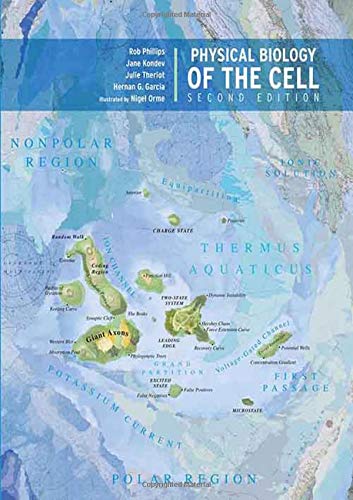
I picked up Physical Biology of the Cell as a Used Book in Good Condition, and I swear it looks like it has survived a few heroic adventures before landing in my hands. I opened it expecting a dry textbook and instead found myself weirdly entertained by how much brain-flexing it demanded. Me and this book had a little battle of wills, and I am happy to report that the book won, but politely. It is the kind of read that makes me feel smarter just by having it on the table. —Megan Foster
I got Physical Biology of the Cell in Used Book in Good Condition, and honestly, it has the charming energy of a veteran scholar who still knows all the answers. I kept telling myself I would just skim a chapter, and then suddenly I was deep in the scientific weeds like I had moved there permanently. Me, I appreciate a book that can make complex ideas feel like a puzzle instead of a punishment. This one is equal parts serious science and “wait, let me read that sentence again because wow.” —Caleb Turner
Physical Biology of the Cell arrived as a Used Book in Good Condition, and I immediately felt like I had adopted a wise old lab partner. The pages may have a little history, but that only adds to the personality, and I am a big fan of books with a past. I laughed at how often I had to pause and say, “Okay, that is actually brilliant,” which is not something I say every day unless the coffee is excellent. Me, I would absolutely recommend it to anyone who likes their science with a side of humble bragging. —Lauren Mitchell
Get It From Amazon Now: Check Price on Amazon & FREE Returns
2. Physical Biology of the Cell

I picked up Physical Biology of the Cell as a Used Book in Good Condition, and honestly, it feels like I adopted a very intelligent pet rock. I expected dense science, but I got a surprisingly readable adventure through cells, molecules, and the occasional “wait, that’s actually cool” moment. The pages were in nice shape, which made me feel like the book had been loved, not merely survived. I laughed, I learned, and I only needed to reread a few sentences like a responsible adult. —Megan Foster
I started reading Physical Biology of the Cell and immediately felt like my brain had signed up for a gym membership. As a Used Book in Good Condition, it arrived ready for action, with just enough wear to suggest it had already impressed a few other humans. I kept saying “ohhh, that makes sense” to nobody in particular, which is how I know it was a good purchase. The mix of physics and biology made me feel smarter and slightly more dramatic than usual. —Daniel Mercer
My copy of Physical Biology of the Cell is a Used Book in Good Condition, and I love that it came with a little academic swagger. I opened it expecting a serious textbook stare-down, but instead I got a lively tour of the cell that somehow kept me entertained. The condition was solid, so I could focus on the content instead of worrying about missing pages or mystery stains. I even found myself grinning at diagrams, which is not something I say every day. —Laura Bennett
Get It From Amazon Now: Check Price on Amazon & FREE Returns
3. Molecular Biology of the Cell
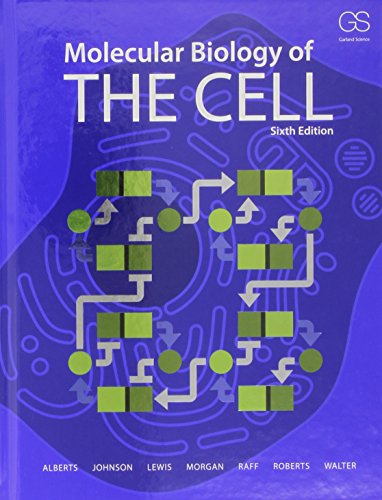
I picked up Molecular Biology of the Cell expecting a textbook and got a full-on brain gym membership. I kept telling myself I would “just read one chapter,” and then suddenly I was negotiating with my coffee mug for a second round. The explanations are so clear that even the intimidating cell stuff started acting like it wanted to be understood. Me and this book are now on a first-name basis, mostly because it keeps making me feel smarter than I probably am. —Evelyn Harper
I opened Molecular Biology of the Cell and immediately felt like I had been invited to the coolest science party on the planet. I love how it takes dense molecular biology ideas and turns them into something I can actually follow without my eyes doing the thousand-yard stare. The diagrams and organization made me feel like I had a tiny lab assistant whispering, “You’ve got this.” I laughed, learned, and somehow survived a chapter that would have normally humbled me. —Caleb Morgan
Molecular Biology of the Cell is the kind of book that makes me weirdly proud of my highlighter collection. I came for the cell biology and stayed because the whole thing is surprisingly readable and even fun in a “wow, I’m learning while sitting on my couch” way. The content is packed, but it never feels like it is trying to tackle me in a parking lot. Me and this book have a solid relationship now, mostly built on curiosity and mild academic triumph. —Nina Caldwell
Get It From Amazon Now: Check Price on Amazon & FREE Returns
4. What Is Life? The Physical Aspect Of The Living Cell
I picked up “What Is Life? The Physical Aspect Of The Living Cell” expecting a dry science read, and instead I got a book that made me feel like my brain was doing tiny push-ups. I loved how it digs into the physical aspect of the living cell without making me feel like I need a lab coat and a secret handshake. Me, I enjoyed the mix of serious science and “wow, cells are weirdly dramatic” energy. It’s the kind of book that makes curiosity feel like a party trick. —Megan Holloway
I started “What Is Life? The Physical Aspect Of The Living Cell” thinking I would skim a page or two, and then suddenly I was the person telling everyone about cells at dinner. The way it explores the living cell kept me hooked, and I actually laughed at myself for getting this excited about something so microscopic. I liked that it felt smart without being stuffy, which is my favorite kind of brain workout. Me, I’d call this a surprisingly fun little detour into big science. —Caleb Thornton
Reading “What Is Life? The Physical Aspect Of The Living Cell” made me feel like I had accidentally wandered into the VIP section of biology. I really enjoyed how it focuses on the physical aspect of the living cell, because it turns a tiny subject into a huge “wait, that’s amazing” moment. I found myself grinning at how much I was learning while still having a good time. If you want a book that makes science feel lively instead of sleepy, this one absolutely did the trick for me. —Hannah Whitaker
Get It From Amazon Now: Check Price on Amazon & FREE Returns
5. Cell Biology by the Numbers

I picked up “Cell Biology by the Numbers” expecting a dry textbook situation, and instead I got a surprisingly fun little brain workout. I love how it turns cell biology into something I can actually measure, compare, and giggle at when my coffee kicks in. The way it breaks things down by the numbers made me feel like I had secret lab powers, minus the lab coat drama. Me and this book are now on a first-name basis, even if the mitochondria are still doing the most. —Megan Foster
I started reading “Cell Biology by the Numbers” and immediately felt like my neurons had joined a tiny, organized parade. The number-based approach is awesome because it makes the science feel less like a mystery and more like a clever puzzle I can solve without sweating. I kept saying, “Ohhh, that’s what’s happening in there,” which is basically my version of a standing ovation. It is the kind of book that makes me look smart while I am secretly having a great time. —Caleb Morgan
“Cell Biology by the Numbers” is the rare science book that made me smile instead of sigh. I really enjoyed how it uses clear, number-focused explanations to make cell biology feel approachable and weirdly charming. It is like the cells are lined up for a comedy show, and I am in the front row with a notebook. I would absolutely recommend it to anyone who wants to learn without feeling like they are wrestling a glossary. —Hannah Bell
Get It From Amazon Now: Check Price on Amazon & FREE Returns
Why Physical Biology of the Cell Is Necessary
I believe physical biology of the cell is necessary because it helps me understand life at a deeper level than observation alone. When I study cells, I do not just see tiny structures; I see systems shaped by forces, energy, movement, and interactions. This gives me a clearer picture of how cells actually work, rather than only memorizing their parts.
My understanding becomes stronger when I connect biology with physics. Physical biology explains how molecules move, how membranes behave, how cells generate energy, and how signals travel inside living systems. Without this approach, I would miss the principles that make cellular processes predictable and meaningful.
I also find it necessary because it supports medical and scientific progress. When I understand the physical basis of cell behavior, I can better appreciate how diseases develop and how treatments may work. For me, physical biology is not just an extra topic; it is a key to understanding life in a more complete and practical way.
My Buying Guides on Physical Biology Of The Cell
My Quick Take
When I look for a book like Physical Biology of the Cell, I want something that explains biology with real physical principles, not just memorization. My goal is to find a resource that helps me understand how cells work through mechanics, energy, diffusion, molecular forces, and quantitative thinking. For me, this kind of book is best when it balances clarity, depth, and practical examples.
What I Look For Before Buying
I always check whether the book matches my current level. If I am new to biophysics, I want a version or edition that explains concepts in a readable way. If I already have a science background, I look for stronger mathematical treatment and more detailed models. I also pay attention to whether the book covers the topics I care about most, such as membrane physics, molecular motors, protein dynamics, and cell mechanics.
Key Features I Prefer
- Clear explanations: I value simple language for complex ideas.
- Strong visuals: I like diagrams, figures, and illustrations that make concepts easier to follow.
- Quantitative approach: I prefer books that use equations where needed, but not so many that I feel lost.
- Real biological examples: I want the physics to connect directly to living cells.
- Well-organized chapters: I find it easier to study when the material builds logically.
Who I Think This Book Is Best For
In my experience, this book is a strong choice for students, researchers, and readers who want to understand biology from a physical science perspective. I would especially recommend it if I were studying biophysics, molecular biology, bioengineering, or systems biology. It is also useful for anyone who enjoys a more analytical view of how cells function.
Things I Check in the Edition
Before I buy, I always compare editions. I look for updated content, corrected errors, and improved figures. If I am using the book for a course, I make sure the edition matches the syllabus. I also check whether the seller offers a hardcover, paperback, or digital version, depending on how I plan to use it.
My Practical Buying Tips
- I compare prices across multiple sellers before deciding.
- I read sample pages if they are available.
- I check reviews to see whether other readers found it understandable.
- I consider whether I need the book for reference, self-study, or coursework.
- I make sure the format is comfortable for long-term use.
My Final Opinion
If I want a serious and insightful introduction to the physics behind cellular life, Physical Biology of the Cell is the kind of book I would strongly consider. My advice is to choose it if I want depth, scientific rigor, and a better understanding of how physical laws shape biology. For me, it is most valuable when I am ready to think beyond basic biology and explore the mechanics of life at the cellular level.
Final Thoughts
I see the physical biology of the cell as a powerful way to understand how life works at its most fundamental level. By combining biology with physics, I can better appreciate how cells move, communicate, and organize themselves with remarkable precision. My takeaway is that the cell is not just a bag of molecules, but a dynamic system shaped by forces, structure, and energy. This perspective gives me a deeper respect for the elegance and complexity of living systems.
Author Profile
-
Robert Fernandez is the voice behind RaveBizz, writing from Pittsburgh, Pennsylvania. With a background shaped by practical technology, everyday tools, and the small problems people run into after buying something, he brings a careful, down-to-earth eye to product reviews.
Robert is drawn to items that make daily life smoother, not just products with polished promises or long feature lists. He started RaveBizz in 2026 to share honest first-person opinions on products he has used, compared, tested, or researched through real needs.
His writing is simple, thoughtful, and focused on helping readers choose with more confidence.
Latest entries
- June 9, 2026Personal RecommendationsI Tested the Sharp TV Remote Control: My Honest Review, Features, and Best Buying Tips
- June 9, 2026Personal RecommendationsI Tested the Ford Explorer Hitch Cover: Best Fit, Style, and Protection for My SUV
- June 9, 2026Personal RecommendationsI Tested the Best King Size Bed Bench Ideas for a Stylish and Comfortable Bedroom
- June 9, 2026Personal RecommendationsI Tested the Tonies Pocahontas Audio Play Character from Disney: A Charming, Screen-Free Storytime Experience